

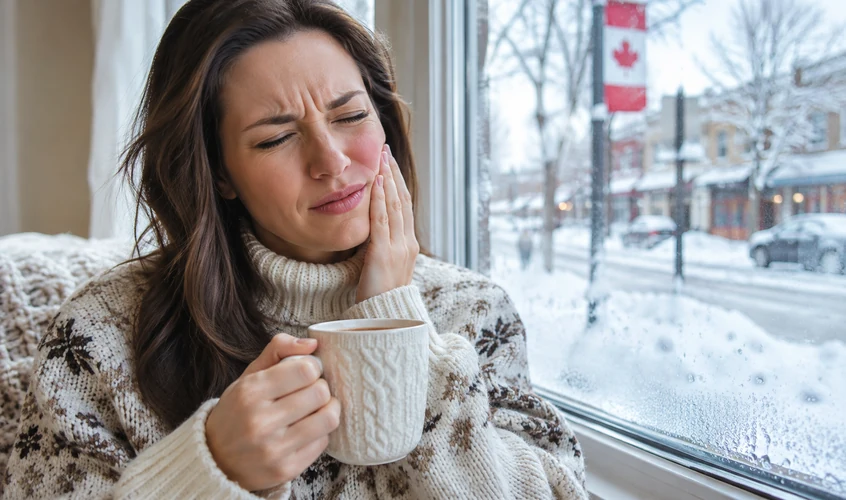
You step outside on a frosty Newmarket morning, take a breath, and feel a sharp zing in your teeth. Or maybe your first sip of hot coffee after shovelling the driveway makes you wince. If your teeth seem more sensitive once the temperature drops, you're not imagining it.
Ontario winters are tough on teeth. Here's why cold weather can trigger sensitivity, and what you can do to feel more comfortable all season long.
Key Takeaways
- Cold air and quick temperature changes can make your teeth expand and contract, which may trigger sensitivity.
- Exposed dentin from worn enamel or gum recession is the most common underlying cause.
- Stress-related clenching, winter colds and dry indoor air can make things worse.
- Desensitizing toothpaste, a soft brush and breathing through your nose often help.
- Sensitivity that lingers or focuses on one tooth should be checked by a dentist.
Why Teeth Feel More Sensitive in Winter
Exposed Dentin
Under your enamel is a layer called dentin, which is full of tiny tubes that lead to the tooth's nerve. When enamel wears thin or your gums pull back, those tubes are exposed. Cold air, cold drinks and even a cold breeze can then send a quick, sharp signal straight to the nerve.Temperature Swings
Teeth expand and contract slightly with heat and cold. Going from a heated car to a minus-20 parking lot, or from icy air to a hot drink, puts your teeth through rapid changes. Over time, this can contribute to tiny cracks in enamel that make sensitivity more noticeable.Breathing Through Your Mouth
When you're bundled up, working out outdoors or dealing with a stuffy nose, you're more likely to breathe through your mouth. That pulls cold, dry air directly across your teeth.Clenching and Grinding
The holidays, year-end deadlines and shorter days can raise stress levels. Many people clench or grind their teeth without realizing it, especially at night. Some people also clench their jaw when they're shivering. Grinding wears down enamel and can cause soreness and sensitivity.Winter Colds and Sinus Pressure
The roots of your upper back teeth sit close to your sinuses. When your sinuses are inflamed from a cold or flu, the pressure can feel like a toothache in your upper teeth. This usually eases once the congestion clears.Dry Indoor Air
Furnaces and space heaters dry out the air, which can leave your mouth drier, especially overnight. Less saliva means less natural protection for your enamel.How to Fix Cold Sensitivity
Switch to a Desensitizing Toothpaste
Toothpastes for sensitive teeth contain ingredients like potassium nitrate or stannous fluoride that calm nerve signals or block the tiny tubes in dentin. They take a few weeks of twice-daily use to work fully, so be patient. Some people find it helps to dab a little on sensitive spots before bed and leave it on.Brush Gently With a Soft Brush
Scrubbing too hard wears away enamel and pushes gums back. Use a soft-bristled brush and gentle circles. See our list of common brushing mistakes to make sure your technique isn't adding to the problem.Cover Up and Breathe Through Your Nose
Pull a scarf or neck warmer over your mouth when you're outside, especially during long walks or outdoor sports. Breathing through your nose warms the air before it reaches your teeth.Watch the Acids
Citrus, sports drinks, wine and soda soften enamel and make sensitivity worse. Read more about how soda affects your teeth and our tips for protecting enamel.Avoid Extreme Temperature Combos
Let very hot drinks cool slightly, and try not to follow ice-cold treats with something steaming.Use a Humidifier
Running a humidifier in your bedroom can help keep your mouth from drying out overnight.Ask About a Night Guard
If you wake up with a sore jaw or headaches, you may be grinding. A custom night guard from your dentist protects your teeth while you sleep.Treatments Your Dentist Can Offer
If home care isn't enough, your dentist has several options to help:- In-office fluoride varnish or desensitizing treatments to strengthen enamel
- Bonding or sealants to cover exposed root surfaces
- Fillings or crowns for worn, cracked or decayed teeth
- Gum grafts for significant gum recession
- Root canal treatment when the nerve is damaged
When to See a Dentist
Mild, brief sensitivity to cold is common. But book a visit if you notice:- Pain that lingers for more than a few seconds after the cold is gone
- Sensitivity in just one tooth
- Pain when biting or chewing
- Swelling, a bad taste or a visible crack
Frequently Asked Questions
Can cold weather crack teeth?
Cold alone rarely cracks a healthy tooth, but frequent temperature swings combined with grinding can contribute to tiny cracks over time.How long does sensitive toothpaste take to work?
Most people notice improvement within two to four weeks of regular use.The Bottom Line
Winter sensitivity is common, but you don't have to wince through the season. Gentle brushing, the right toothpaste and a good scarf go a long way. If the pain sticks around, find a Newmarket dentist to get to the root of the problem.* Newmarket Dentist provides general information only. Our aim is to provide the most accurate information possible, but we do not take responsibility for any errors. In order to get the best results it is important to consult with your dentist or health care professional for further information, diagnosis or treatment.
