

Every November, moustaches pop up across Newmarket in support of Movember, the campaign that raises awareness for men's health. Prostate cancer, testicular cancer and mental health get a lot of attention. But there's another men's health issue that deserves a spot in the conversation: oral cancer.
Mouth and throat cancers are more common in men than women, and cases linked to the human papillomavirus (HPV) have been rising. The encouraging part is that your dentist is often the first person to spot early warning signs. Here's what every man should know.
Key Takeaways
- Oral and oropharyngeal (throat) cancers affect men more often than women.
- Tobacco, heavy alcohol use and HPV infection are major risk factors.
- HPV-related throat cancers are increasing, including in men who have never smoked.
- Warning signs include mouth sores that don't heal, lumps, red or white patches and trouble swallowing.
- Regular dental check-ups include an oral cancer screening that takes only a few minutes.
Why Oral Cancer Is a Men's Health Issue
Oral cancer includes cancers of the lips, tongue, gums, cheeks and the floor and roof of the mouth. Cancers further back, in the tonsils and base of the tongue, are called oropharyngeal cancers. According to the Canadian Cancer Society, these cancers are more common in men. Part of the reason is that men have historically smoked and drunk alcohol more. Men are also more likely to skip routine medical and dental appointments, which means problems may be found later, when they're harder to treat.The HPV Connection
HPV is a very common virus, and most people will be exposed to it at some point. Most infections clear on their own. But certain high-risk types can persist and lead to cancer years later, including cancers of the throat. HPV-related oropharyngeal cancer has been rising in Canada and is now one of the fastest-growing types of head and neck cancer, especially among men. It often affects people who don't smoke or drink heavily, which surprises many patients. The HPV vaccine protects against the types most linked to cancer. In Ontario, it's offered free through school programs, and adults can ask their doctor whether vaccination makes sense for them.Other Risk Factors to Know
The Canadian Cancer Society's risk factor page lists several factors that raise your chances of developing oral cancer:- Tobacco use, including cigarettes, cigars, pipes and chewing tobacco
- Heavy alcohol use, with risk climbing even higher when combined with smoking
- HPV infection
- Sun exposure to the lips, especially for men who work outdoors
- Age, with most cases diagnosed after 40, though HPV-related cases can occur younger
Signs and Symptoms Every Man Should Watch For
Early oral cancer often doesn't hurt, which is why it's easy to ignore. See a dentist or doctor if any of these last longer than two weeks:- A sore, ulcer or spot in your mouth that doesn't heal
- Red or white patches on your gums, tongue, cheeks or tonsils
- A lump or thickening in your cheek, mouth or neck
- A persistent sore throat or the feeling that something is stuck in your throat
- Difficulty chewing, swallowing or moving your tongue or jaw
- Numbness in your tongue, lips or mouth
- A hoarse voice or ear pain on one side that won't go away
- Loose teeth or dentures that suddenly don't fit
What Happens During an Oral Cancer Screening?
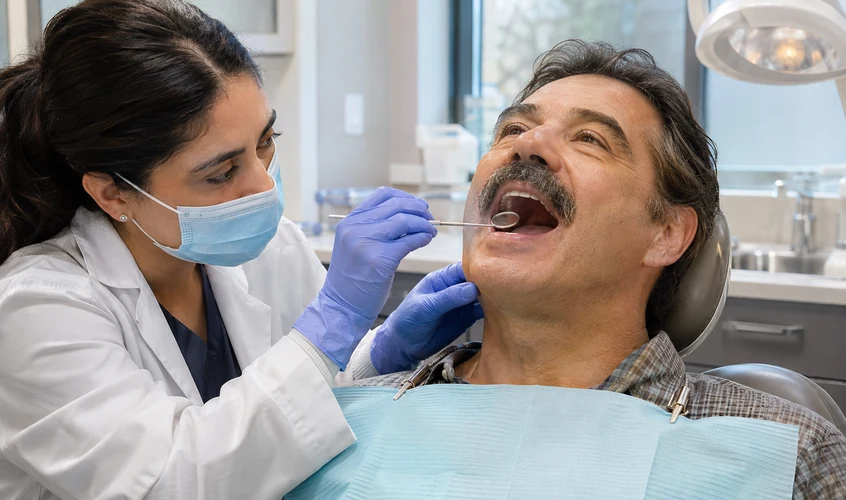
If you see a dentist regularly, you've probably had an oral cancer screening without realizing it. It's usually part of a routine exam and only takes a few minutes. Your dentist will:- Look at your lips, tongue, cheeks, gums and the roof and floor of your mouth
- Check your throat and tonsils as far as they can see
- Feel your jaw and neck for lumps or swollen lymph nodes
- Ask about any changes you've noticed
Simple Steps to Lower Your Risk
- Quit smoking or chewing tobacco. Ontario offers free support through programs like Smokers' Helpline.
- Limit alcohol.
- Ask your doctor about the HPV vaccine.
- Use a lip balm with SPF when you're outside.
- Book a dental check-up at least once a year.
Frequently Asked Questions
Does an oral cancer screening hurt?
No. It's a quick visual and physical check that's usually part of your regular dental exam.Can non-smokers get oral cancer?
Yes. HPV-related throat cancer often affects people who have never smoked.How often should I be screened?
Most people get screened at each routine dental check-up. If you have higher risk factors, your dentist may recommend more frequent checks.The Bottom Line
This Movember, add your mouth to your men's health checklist. Oral and throat cancers are more treatable when caught early, and a screening takes just minutes during a regular dental visit. If it's been a while, find a dentist in Newmarket and book your check-up today.* Newmarket Dentist provides general information only. Our aim is to provide the most accurate information possible, but we do not take responsibility for any errors. In order to get the best results it is important to consult with your dentist or health care professional for further information, diagnosis or treatment.
